
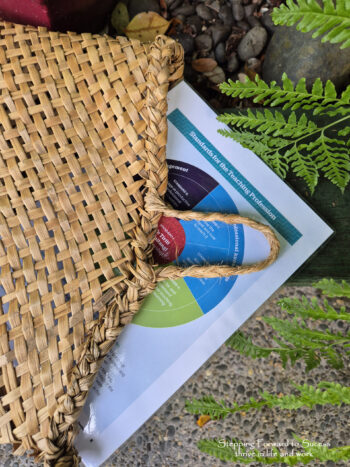
Change is on the horizon for the teaching profession in Aotearoa.
From 2026, early childhood education (ECE) centres and schools will begin using the updated 2026 Standards for the Teaching Profession as the foundation for teacher practice, professional growth cycles, and certification preparation.
The updated standards have been developed to provide a clearer articulation of what is required as a kaiako. They contain new areas of focus and clarify certain aspects of effective teaching.
They also create valuable opportunities for ECE leaders and kaiako to engage collaboratively for professional development and continuous improvement.
Let’s explore what’s changing, what the 2026 Teaching Standards will look like in an ECE setting, and how you can support your teachers with the changes.

When Are Things Changing?
For some time now, the ECE sector has been guided by the 2017 Standards for the Teaching Profession. They have detailed what certification, development, and high-quality practice have looked like since their introduction.
The 2026 Teaching Standards will do the same thing on the following timeline:
- In 2026, centres will start using the 2026 Standards for Professional Growth Cycle (PGC) reflections and conversations, with a focus on shared understanding within each team.
- Starting in 2027, the 2026 Standards will be used for all certification purposes and re-certification processes.
If you are currently working towards your full certification, this transition year means your 2025 PGC Annual Summary will still reflect the 2017 Standards, but going forward, the emphasis will shift to the 2026 Standards.
This transition period is an ideal time for kaiako and leaders to collaboratively explore what the new standards mean in practice. While it is a compliance task, it can also be a shared journey of understanding and growth.
A Revised Focus – Curriculum, Culture & Te Tiriti o Waitangi
One of the most significant changes in the 2026 Standards is how Te Tiriti o Waitangi is now centrally positioned, as it was always meant to be. In the 2026 Standards, Te Tiriti is now a key focus and is integrated throughout the entire framework.
Te Tiriti is not a standalone standard. It is woven into our professional knowledge, practice and engagement. A big focus is on how kaiako incorporate Te Tiriti in culturally responsive ways across all areas of teaching and learning. This includes everything from planning and assessment to the relationships you build with tamariki, whānau and your communities.
This integrated approach better reflects how we live and teach in Aotearoa. The tweaks to the Standards provide everyone with a clearer articulation of the curriculum expectations of Te Whāriki and the rich multicultural environment that is early childhood education.
Another key change within the Standards is promoting positive behaviours, using technology and fostering literacy and numeracy. This change aligns well with the highly effective task of reflection. Kaiako can reflect on what they know and do within their teaching practice, and what they can focus on to support the tamariki in their centres within the Standards.
What The 2026 Teaching Standards Look Like
The new Standards are structured across three domains:
- Professional Knowledge – “I know”
Focusing on what we know and understand about learners, learning processes, curriculum, pedagogy, assessment, and inclusive practices.
- Professional Practice – “I do”
Describing how we demonstrate that knowledge in everyday teaching, from planning and implementing learning experiences to supporting diverse learners.
- Professional Engagement – “I am”
Centering on who we are as professionals, detailing how we engage in ongoing learning, reflective practice, and foster productive relationships with colleagues, communities and whānau.
Within these domains there are eight standards that outline the expectations for kaiako, along with a set of focus areas within the standards that provide practical detail and examples for everyday practice. You can find more information about the Standards here on the Teaching Council of Aotearoa website.
It’s important to remember that even though the new standards are organised into focus areas, they shouldn’t be treated as a tick list. Instead, you should think of them as rich prompts for professional reflection. They are a way to open up conversation about your practice, centre culture, and professional growth pathways.
What The Changes Mean For ECE
The updated standards offer a great opportunity for you and your kaiako to pause and reflect together about your collective values and professional practices.
Here are some ways to get the change started:
- Collaborative team conversations
Ensure that the 2026 Standards become a shared language for your entire team. The Standards don’t just apply to management and team leaders. Everyone can embrace them as part of their professional development. Team meetings, professional growth cycle moments, or learning workshops are all excellent ways to explore the domains and standards together.
- Compare the old and the new
A powerful way to identify the changes is to compare the 2017 and 2026 Standards. As a collaborative exercise, your team can identify similarities, differences, and new focuses. This simple exercise will help make the changes more familiar and reduce any anxiety about the unknown. It is also a great way to uncover potential areas for professional inquiry and growth.
- Create talking points
The new standards are a fantastic framework for discussion at your centre. It is an excellent opportunity to reflect on key areas like:
- Where are we strong?
- Where might we need more understanding?
- Where are we already incorporating this into our practice and how can we deepen it?
This approach will help you all recognise the standards as tools for reflection and planning, rather than just areas of assessment.
A Tool For Shared Understanding
Although it is not an actual requirement, your centre could really benefit from developing an agreed Quality Practice Template (QPT). A QPT is something that defines what good practice looks like in your specific education setting.
When your centre leaders and kaiako work together to co-create a template that outlines how your practices align with the 2026 Standards, it:
- Clarifies the expectations for everyone
- Creates consistency for team reflection and professional practice
- Gives a clear reference point for any queries
- Highlight your centre’s culturally responsive practices
The great thing about a QPT is that it is a living document that can evolve over time to support your centre’s practices. It isn’t just a tick box that you complete once and forget about!
Support Through Change
Any form of change can be hard. That’s why it is imperative to have support for all team members, including the leaders. External mentorship can be a highly effective way to remove any uncertainty around the 2026 Standards.
An experienced ECE Mentor like myself can:
- Facilitate team reflection and unpacking of the standards
- Help identify links between practice and standards
- Support any kaiako preparing for full certification under the new framework
- Strengthen confidence in conversations about practice
- Help co-design a QPT centred around the 2026 Standards
Using mentorship as part of your centre’s adoption of the 2026 Standards ensures that the transition becomes a developmental opportunity, not an administrative burden. By introducing the standards collaboratively, aligning them with your centre’s values, and using tools like QPT and mentorship, you can transform the transition to the 2026 Teaching Standards into a powerful professional journey.
If you’d like support navigating this process, I’d love to help as an external ECE Mentor. Let’s talk about how I can support your whole team as you adopt the new 2026 Standards.
The great thing about mentorship is that you can layer the support you receive by having both a centre assigned mentor and an external mentor. Learn more about the Kete Ako programme here: Kete Ako programme.
I also have resources that can be added to your toolkit. Click here to read more about the Roadmap. Or click here to purchase the Roadmap to Certification e-book for Provisional Certified Teachers. Alternatively, if you are wanting to learn more about my packages, reach out today.
Useful links:
My Website