
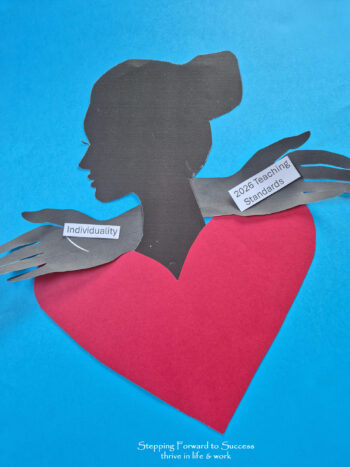
As a kaiako, your goal is to build your professional knowledge to support the tamariki at your centre.
The 2026 Teaching Standards challenge you to explore what you know, how you understand it, and how you can continue to grow that knowledge over time.
But effective teaching is not just about what you know.
Knowledge alone is not enough.
What truly matters is how that knowledge shows up in your everyday practice as a kaiako. So, let’s explore the realm of professional practice in greater detail.

From Knowing To Doing
Professional practice is the domain where all that knowledge you have becomes visible. It is reflected in the way you interact with tamariki, the decisions you make in the moment, the environments you create, and the learning experiences you support.
The 2026 Teaching Standards emphasises the connection between knowledge and action. It’s not about ideas that sit in the background. Rather, it’s about using those ideas to actively shape your teaching. This means your practice is not random or reactive.
It is intentional.
It is informed.
And it is responsive.
Understanding Practice Within Your Centre
Every early childhood centre has its own systems, processes, and expectations when it comes to planning and assessment. Your centre will be no different.
The expectations will surround things like learning stories, planning cycles, internal evaluation, and documenting tamariki’s learning and development. Understanding these protocols is a key part of your professional practice.
But here is the important distinction. It’s not just about following the systems. It is about understanding the purpose behind them. While undertaking these tasks, it’s a great time to reflect on things like:
- What is the documentation showing about tamariki’s learning?
- How does my planning support continuity and progression?
- Am I using a process to deepen learning, or simply to complete a task?
When you understand why you are doing these tasks, your practice can become more meaningful and more impactful for the tamariki.
Moving Beyond Routine
In busy ECE environments, it can be easy to fall into a routine where planning and assessment become two things to be “ticked off your list”. The 2026 Teaching Standards invite you to look at professional practice in a different light. Compliance is vitally important, but it can’t be your sole focus. The Standards encourage you to teach with intention also.
How can you do that? Well, it means:
- Planning with purpose
- Documenting with meaning
- Responding thoughtfully rather than automatically
When your practice is grounded in understanding, even the smallest interactions can become powerful teaching moments.
Supporting Learning In A Play-Based Curriculum
One of the most important aspects of Professional Practice is how we support the tamariki’s learning through play. We all know that play is not separate from learning. In fact, play is learning! But only if that play is meaningful.
Creating meaningful play-based learning requires more than just providing a few resources or activities. It requires intentional teaching, which means intentional planning.
As a kaiako, that intentionality includes:
- Noticing the interests and cues of the tamariki
- Recognising learning opportunities within play
- Extending thinking through conversations, questioning, and engagement
- Creating environments that invite exploration and curiosity
Intentional teaching is hitting the sweet spot between completely stepping back and taking over! You are walking alongside the tamariki as a co-learner and guide. It’s about being intentional, but also remaining responsive to the tamariki.
The 2026 Teaching Standards encourage kaiako to remain flexible, reflective, and open to experiencing learning that naturally unfolds. An example of this could be planning an experience based on the tamariki’s needs, but in the moment, learning takes a completely different direction.
When this happens, you can consider it as a valuable learning opportunity and the chance to be responsive to deepen the tamariki’s learning.
Reflection And Your Practice
In our last article, we discussed how Professional Knowledge requires reflection. So too does Professional Practice. It’s not enough to simply do the doing in a day. Reflection is a key part of your development.
Don’t forget to ask yourself reflective questions, like:
- Why did I choose to respond in that way?
- What impact did my actions have on the child’s learning?
- What could I do differently next time?
These reflections help to strengthen the connection between what you know and what you do. This supports continuous growth in your teaching because professional practice is never “finished”. It’s also not a checklist to simply complete.
Practice is a living, evolving expression of your teaching. It encompasses your values, knowledge, relationships with the tamariki, and your commitment to growth. When you recognise this and ground your practice in understanding, you can be reflective and intentional, which creates rich and meaningful learning experiences for the tamariki.
The Ongoing Journey
Professional Practice is not something you master once and move on from. It’s also not something that needs to be perfect right now. Practice is something that continues to develop throughout your teaching journey.
And you don’t have to do it alone. It can be incredibly helpful to have the support of a mentor to ensure your practice remains meaningful, intentional, and deeply connected to the learning of the tamariki.
As you continue to align your knowledge with your practice, you will begin to see the impact on your own confidence, and also in the learning and development of the tamariki in your care. As an experienced ECE Mentor, I’d love to support you in this journey.
Let’s chat to see if we’d be a good fit to work together!
The great thing about mentorship is that you can layer the support you receive by having both a centre assigned mentor and an external mentor. Learn more about the Kete Ako programme here: Kete Ako programme.
I also have resources that can be added to your toolkit. Click here to read more about the Roadmap. Or click here to purchase the Roadmap to Certification e-book for Provisional Certified Teachers. Alternatively, if you are wanting to learn more about my packages, reach out today.
Useful links:
My Website
Great content! Keep up the good work!
Kia ora and thank you for sharing. I would love to know what you took away from this.
Nga mihi, Leanne