
Early childhood is an important time to nurture and deepen a tamaiti’s social and emotional competence.
Helping tamariki recognise emotions, build relationships, learn to navigate challenges, and to develop resilience is an important part of our role as kaiako.
But what happens when those emotions become big?
It can result in physical behaviour, withdrawing, shouting, refusing to participate, or struggling to regulate their emotions.
These moments can be challenging, but they can also provide some of our most valuable opportunities for teaching and learning.
The 2026 Teaching Standards encourage us to look beyond the behaviour itself and consider what we know about the learner, what might be influencing their behaviour, and how we can respond in ways that support their learning and wellbeing.
Let’s explore these ideas in a little more detail.
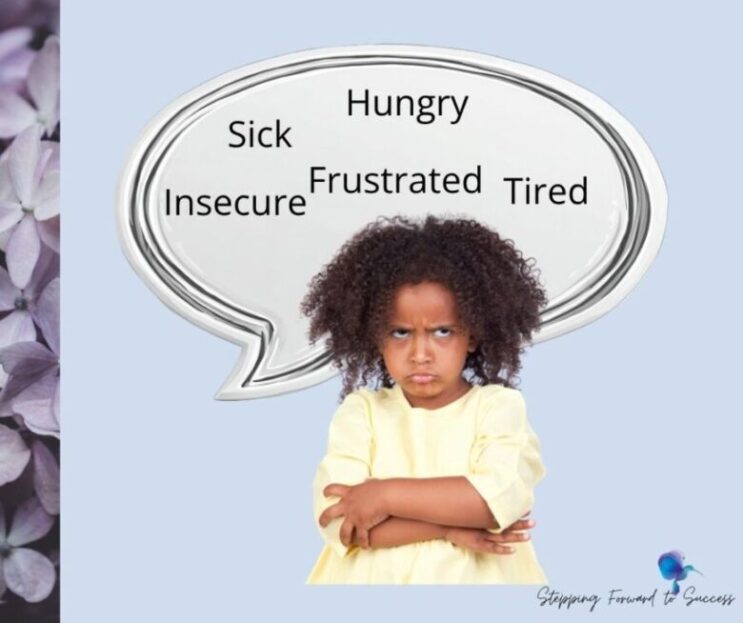
Behaviour Is Communication
One of the most powerful shifts we can make as a kaiako is to stop thinking about behaviour as something that needs to be “managed”.
Instead, we can ask:
What is this behaviour communicating?
A tamaiti who pushes another tamaiti may be struggling to communicate their needs. A tamaiti who becomes upset during transitions may be finding change difficult. And a tamaiti who continually leaves an activity may be overwhelmed, disengaged, or trying to communicate that the experience isn’t meeting their needs.
This connects strongly with Standard 3 – Know the learner and the learning process.
Focus area 3.1 asks kaiako to understand the cognitive, emotional, and social factors that affect how children learn. Focus area 3.2 also highlights the importance of understanding diverse needs, including neurodivergence, disability, and trauma, and knowing when additional specialist support may be needed.
The behaviour we see is only one part of the story. Our role is to become curious about what sits underneath it.
Every Tamaiti Is An Individual
There is no blanket strategy that will work for every tamaiti. This is where Standard 3.2 – Understand how diverse needs can be met becomes particularly important.
Two tamariki might display very similar behaviours but need completely different support. One might need a quieter space, while the other might benefit from visual cues and predictable routines. Another might need help developing language to communicate their frustration, while another tamaiti might need additional support from specialists or their whānau.
This is why knowing the tamaiti matters.
When we understand the strengths, interests, culture, communication style, experiences, and individual needs of a tamaiti, we can then decide the best way to respond.
We also need to remember the diversity in other cultures. Standard 3.3 – Understand culturally responsive teaching reminds us that learning experiences should be meaningfully connected to the culture, backgrounds, and interests of the tamariki. Social behaviour is always influenced by experience; recognising that as a kaiako and responding appropriately will ensure we don’t expect every tamaiti to respond in exactly the same way.
Working With Tamaiti Emotions
Emotions are a very real part of every day, and the tamariki will need to learn how to process them. That’s why we don’t want to remove emotion from the situation. He Māpuna te Tamaiti is an incredibly valuable resource that includes practical strategies for developing social and emotional competence.
Taking some concepts out of this resource, you can help the tamariki process their heightened emotions by:
- Naming and acknowledging the feelings
“I see you are feeling frustrated because you wanted to keep playing.” - Model calming strategies
“Let’s take some slow breaths together.” - Prepare tamariki for potential challenges
“We are going to start tidying up in five minutes; what could help you get ready?” - Develop problem-solving skills
“It seems you both want the same truck; what could we do about that?” - Reflect
Once the tamaiti has calmed down, revisit what happened and explore what they might try next time instead.
Evolving Our Teaching Strategies
Understanding that every tamaiti has different needs is one thing, but reflecting that in your teaching practice is another. Standard 4 – Plan for and implement effective teaching and learning is all about adapting your teaching strategies in response to the needs of the individuals or groups at your centre.
In practice, that might mean changing the environment, adjusting the way you communicate, offering choices, using visual prompts, modifying routines, providing additional support during transitions, or intentionally teaching social problem-solving.
The goal isn’t to make the tamariki “fit” our teaching approach. It is to consider how our teaching approach can better support the tamariki.
That can begin with prevention. If we create a welcoming, inclusive environment with clear expectations, consistent routines, and warm relationships, it can prevent some challenging behaviour before it occurs.
Create safe spaces where the tamariki can safely practise their developing social and emotional skills by asking these powerful questions:
- What could make the transition feel more predictable?
- What could we change to make the environment feel less overwhelming?
- How might we make our expectations clearer?
- Where could we create more opportunities for tamariki to practise the skills we are asking them to use?
Reflect, Reflect, Reflect
Challenging moments are valuable opportunities for professional learning. It can be really powerful to reflect on them as they occur.
This simple set of questions can help you continually strengthen your knowledge and practice:
- What happened before the behaviour?
- What might the tamaiti have been communicating?
- How did I respond?
- What worked?
- What could I try differently next time?
Supporting the social and emotional competence of the tamariki at your Centre is not about finding the perfect response every time. It is about remaining curious, responsive and ready to learn.
You Don’t Have To Learn Alone
Learning is always easier when you have someone in your corner to bounce ideas off. Supporting social and emotional competence can feel complex, particularly when a tamaiti has additional or diverse needs or when challenging behaviour is becoming a regular part of your teaching day.
This is where an external ECE mentor can provide valuable support. A mentor can give you a safe space to unpack challenging situations and explore practical strategies to best support each tamaiti.
He Māpuna te Tamaiti reminds us that universal strategies provide a strong foundation for all tamariki. However, a personalised approach and additional support are necessary for each tamaiti, especially if they have complex needs or significant challenging behaviour.
An experienced ECE mentor, like myself, can help remind you that you don’t need to have every answer. You just need to be willing to understand, adapt, and keep learning.
When we are able to look beyond the behaviour and see the tamaiti for who they are, we create opportunities for genuine development. And that is where social and emotional competence really begins. Let’s chat about whether we’d be a good fit to work together. Contact me now.
The great thing about mentorship is that you can layer the support you receive by having both a centre assigned mentor and an external mentor. Learn more about the Kete Ako programme here: Kete Ako programme.
I also have resources that can be added to your toolkit. Click here to read more about the Roadmap. Or click here to purchase the Roadmap to Certification e-book for Provisional Certified Teachers. Alternatively, if you are wanting to learn more about my packages, reach out today.
Useful links:
My Website